
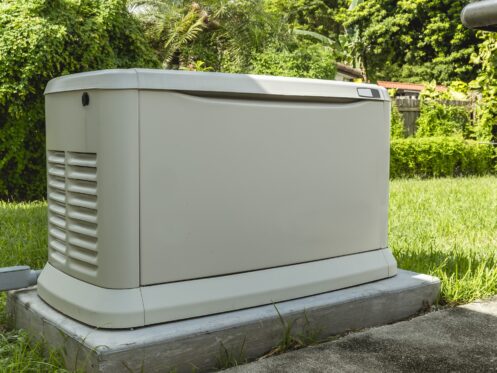
A home generator proves invaluable during power outages and emergencies. It keeps your lights on, your fridge running, and your devices charged. To achieve these benefits, you must use the generator correctly and safely. When used the wrong way, you increase the risk of fire and carbon monoxide poisoning. Whether you already own a generator or plan to buy one, these tips will help keep you safe during emergencies.
Difference Between a Whole-Home and Standby Generator
A whole-home generator provides power to your entire house and typically runs on natural gas or propane. It automatically starts when there’s a power outage. A standby generator is similar to this, but it usually powers only certain circuits. Both types are installed permanently, but whole-home models provide more power and convenience for complete backup coverage.
Compared to portable generators, powered by gas and limited by what appliances they can power, permanent types are much safer. They don’t require manual refueling, gasoline storage, and other dangers and upkeep required by portable models.
Never Operate a Enclosed Generator
You should never run a generator if it is enclosed. When generators turn on, they produce carbon monoxide gas. Even though this gas has no smell or color, it can be deadly within minutes if it builds up indoors. With this in mind, you must always place the generator outdoors.
Maintain at Least 20 Feet of Distance
You should keep the generator at least 20 feet away from your home. This will help prevent carbon monoxide from seeping into the house through open doors and windows. A professional installer will ensure there is proper clearance.
Position on a Dry, Level Surface
Always set up the generator on flat ground where it does not tend to get soggy or muddy. This will help the generator stay stable, which is crucial for preventing tip-overs. Ideally, you should place it on a patio or concrete pad. Flat gravel areas also work well and provide decent drainage to prevent water from pooling around the generator. Any professional electrician specializing in generators will make sure they pick an appropriate installation location.
Avoid Backfeeding
Backfeeding occurs when you plug a generator directly into a wall outlet. Although this may seem like a quick way to provide power to the house, it is extremely dangerous. Backfeeding sends power through wires in reverse, putting utility workers and neighbors at risk of electric shock or injury.
Instead of backfeeding, you should have an electrician install a transfer switch. This will isolate the home’s electrical system from the grid, allowing you to use the generator safely. We offer generators that our electricians connect directly to your system, so there’s no plugging or unplugging to worry about.
Use the Correct Fuel Type
Not all generators are the same. Some use gasoline, while others use propane or diesel as fuel sources. You must know what type of fuel your generator uses to avoid damage and malfunctions. Additionally, ensure that the fuel you use is always fresh. Old fuel can clog the carburetor and cause starting problems or engine failure. If you haven’t used the generator for several weeks or months, empty the tank and refill it with clean fuel.
A huge benefit of whole-home generators and permanently-installed standby models is that they attach to a natural gas line or propane tank, so you don’t have to mess with dangerous gasoline or store fuel in your garage.
Store Fuel Safely
It is a good idea to keep some extra fuel on hand at all times. This will ensure you have enough power when an outage hits unexpectedly, which can be incredibly stressful. To store the fuel, keep it away from the generator and your house. Fuel is highly flammable and emits dangerous fumes. Regardless of where you store the containers, label them so everyone knows what is inside. Always cap them tightly after use. If your generator draws from a propane tank, keep an eye on the levels and make sure it gets refilled by a professional regularly, especially before storm season.
Turn Off Generator Before Refueling
Switch off the generator and let it sit for 15 minutes before refueling it. If you add fuel to a hot engine, it has a higher likelihood of catching fire. Even a small splash on the hot surface can ignite.
Also, don’t ever refill the generator all the way to the top. The fuel needs room to expand as it heats up. When the tank is too full, it won’t have room to expand safely so that it will overflow. To prevent fuel from spilling down the side of the generator as you pour it in, use a funnel.
Permanent generators powered by natural gas or propane don’t have this problem because the fuel is fed automatically, with no need for dangerous manual refueling.
Never Exceed the Generator’s Wattage Capacity
Generators have limits regarding their wattage capacities. Some handle only essential appliances, while others can power an entire home. You must know the wattage capacity to determine how many devices you can safely connect. If you exceed the wattage limit, you’ll increase the risk of overloading and damaging the generator.
Many homeowners write down their most important devices and their wattage usage. They can then plan and prioritize to avoid overloading the system. Whole-home generators provide enough power to keep your entire house running, but they cost more than lower-wattage models.
Read the Manual Thoroughly
One of the biggest mistakes you can make when using a generator is not reading the owner’s manual. It contains a wealth of helpful information regarding operation, maintenance, and safety. Every model is different, so having a good understanding of your specific unit will help prevent damage and accidents. This is of the utmost importance for staying calm and safe during an emergency.
Monitor Oil and Fuel Levels Regularly
The generator’s oil level greatly impacts its overall performance. You should check it before switching the unit on each time. If you run the generator for several days, you need to keep checking the oil level. Low oil will ruin the engine and cause costly repairs. Many generators come with a low-oil shutoff feature, but it’s still important to check.
Use Surge Protectors for Electronics
The power output of a generator is not always constant. Particularly when powering it on, there may be spikes or dips in the voltage. Electronic devices like laptops and televisions are susceptible to this. The sudden fluctuations can damage internal components and shorten the device’s lifespan. Thankfully, you can protect sensitive electronics with surge protectors.
Storing Your Generator
Once the emergency is over, you should clean your portable generator and drain any leftover fuel. Doing this ensures that the system is ready for the next power outage. All you’ll have to do is add new, clean fuel. Covering yours with a fitted generator cover will prevent dust buildup and protect it from moisture problems. Since permanent generators never have to be moved and switch on and off automatically, they’re much easier to use.
Get 24/7 Emergency Help
If you encounter any problems with your generator, you can always access 24/7 emergency assistance from our electrical services experts. These are useful for troubleshooting malfunctions, fuel issues, and electrical faults.
Bryant Heating, Cooling, Plumbing & Electric offers 24/7 emergency support for problems with generators. We understand the importance of having backup power, especially during bad weather in Kentucky. We have been serving the Louisville community since 1940 and also have locations in Indiana and Ohio. Our company has every service you could need for HVAC, plumbing, or electrical.
Call Bryant Heating, Cooling, Plumbing & Electric now to access top-tier generator services in Kentucky, Indiana, and Ohio.
