Kentucky summers can be hot, humid, and hard on your air conditioner. When the house feels sticky or uncomfortable, it is tempting to keep lowering the thermostat until the air feels better.
The problem is that lower settings can increase cooling costs quickly, especially during long stretches of humid weather. The right thermostat strategy should help you stay comfortable without making your AC run harder than necessary. Here is what Kentucky homeowners should know about summer thermostat settings, humidity, and cooling efficiency.
How Kentucky Humidity Affects AC Demand
Summer cooling in Kentucky is not just about temperature. Humidity plays a major role in how comfortable your home feels. When indoor humidity is high, the air can feel warmer than the number on the thermostat.
Your air conditioner helps remove some moisture as it cools, but humid weather can still lead to longer run times. If the system is undersized, oversized, aging, or not maintained, it may struggle to manage both temperature and humidity.
That is why advice written for dry climates does not always work well here. In Kentucky, the goal is not only to set the thermostat higher. It is also to keep humidity under control so your home feels comfortable at a reasonable temperature.
What Thermostat Setting Saves Energy in Summer?
A good starting point is 78°F when you are home and need cooling. This setting is often recommended because it can limit unnecessary AC use while still keeping many homes comfortable.
That does not mean 78°F is perfect for every household. Your ideal setting depends on your home, insulation, humidity level, health needs, and personal comfort. If 78°F feels too warm, try lowering the temperature one degree at a time instead of making a large adjustment all at once.
Small thermostat changes matter. The lower you set the temperature, the longer your AC usually has to run. Over time, that can increase your energy use and raise cooling costs.
How Should You Set the Thermostat When You Are Away?
If you are gone for several hours, raising the thermostat can help reduce wasted cooling. Many homeowners set the temperature a few degrees higher while they are at work or away from home during the day.
A programmable or smart thermostat can make this easier by adjusting the temperature on a schedule. For example, you might allow the home to warm slightly while you are away, then have the system begin cooling before you return.
Avoid extreme setbacks during very hot and humid weather. If the house gets too warm or humid, your AC may have to run for a long time to bring the temperature back down. A moderate adjustment is usually more practical than letting the home heat up too much.
What Temperature Is Best for Sleeping?
Many people sleep better in a cooler room. If your daytime setting is around 78°F, you may prefer a slightly lower setting at night. The right number depends on your comfort, bedding, ceiling fan use, and how well your home holds temperature.
Because outdoor temperatures usually drop overnight, your AC may not have to fight as much direct heat from the sun. That can make nighttime cooling feel more comfortable without the same demand your system faces in the afternoon.
If you use a programmable thermostat, you can set a nighttime schedule and then raise the temperature again in the morning. This helps keep comfort consistent without needing to adjust the thermostat manually every day.
Why Humidity Control Matters
Humidity control can make a big difference during a Kentucky summer. When indoor humidity is lower, your home can feel more comfortable at a higher thermostat setting. That may help reduce how often you feel the need to lower the temperature.
Start with simple steps. Keep doors and windows closed when the AC is running. Use bathroom fans during showers and kitchen ventilation while cooking. Check weatherstripping around doors and windows so humid outdoor air is less likely to leak inside.
If your home often feels damp or sticky even when the AC is running, it may be worth having the system checked. In some homes, a whole-house dehumidifier can help manage moisture more directly and support better comfort during humid weather.
Can a Smart Thermostat Help Lower Cooling Costs?
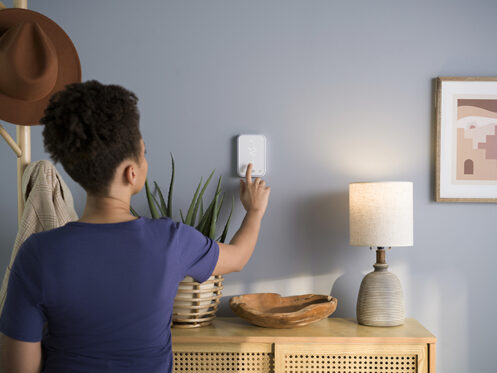
A smart thermostat can help many homeowners use their HVAC system more efficiently. These thermostats make it easier to create schedules, adjust settings from your phone, and reduce unnecessary cooling when no one is home.
Actual savings vary based on your habits, your home, your HVAC system, and how the thermostat is used. A smart thermostat will not fix an inefficient AC system or a poorly insulated home by itself, but it can help you manage cooling more consistently.
If you often forget to adjust your thermostat, travel frequently, or have an unpredictable schedule, a smart thermostat may be a useful upgrade.
Do AC Maintenance and System Condition Affect Savings?
Yes. Thermostat settings matter, but they are only one part of summer energy savings. Your air conditioner still needs to be clean, properly charged, and working correctly to cool efficiently.
Annual AC maintenance can help identify dirty coils, clogged filters, weak components, drainage problems, and other issues that may affect performance. A well-maintained air conditioner is more likely to cool consistently during hot, humid weather.
If your AC is older, needs frequent repairs, or struggles to keep up, it may also be worth discussing replacement options. A properly sized, higher-efficiency system may help reduce energy use while improving comfort.
Stay Comfortable Without Overworking Your AC
The best summer thermostat setting is one that balances comfort, humidity control, and energy use. For many Kentucky homeowners, 78°F is a good place to start when the home is occupied. From there, small adjustments, smart scheduling, humidity control, and routine maintenance can all help improve comfort.
Bryant Heating, Cooling, Plumbing & Electric helps homeowners in Louisville, KY, and the surrounding area with thermostats, AC maintenance, humidity concerns, and cooling system upgrades. As a Carrier Factory Authorized Dealer, our team can help you choose the right thermostat settings and HVAC solutions for your home.
Contact Bryant Heating, Cooling, Plumbing & Electric today to schedule thermostat or AC service and get your home ready for Kentucky summer weather.
