When your furnace turns on, runs for a few minutes, shuts off, then starts up again shortly after, it isn’t doing you any favors. Short-cycling is more than an annoyance. It drives up energy bills, creates uneven comfort, and puts strain on your heating system. You may notice short-cycling during colder months and assume it’s just part of winter heating, but it’s actually a sign that something isn’t working correctly.
What Furnace Short-Cycling Really Means
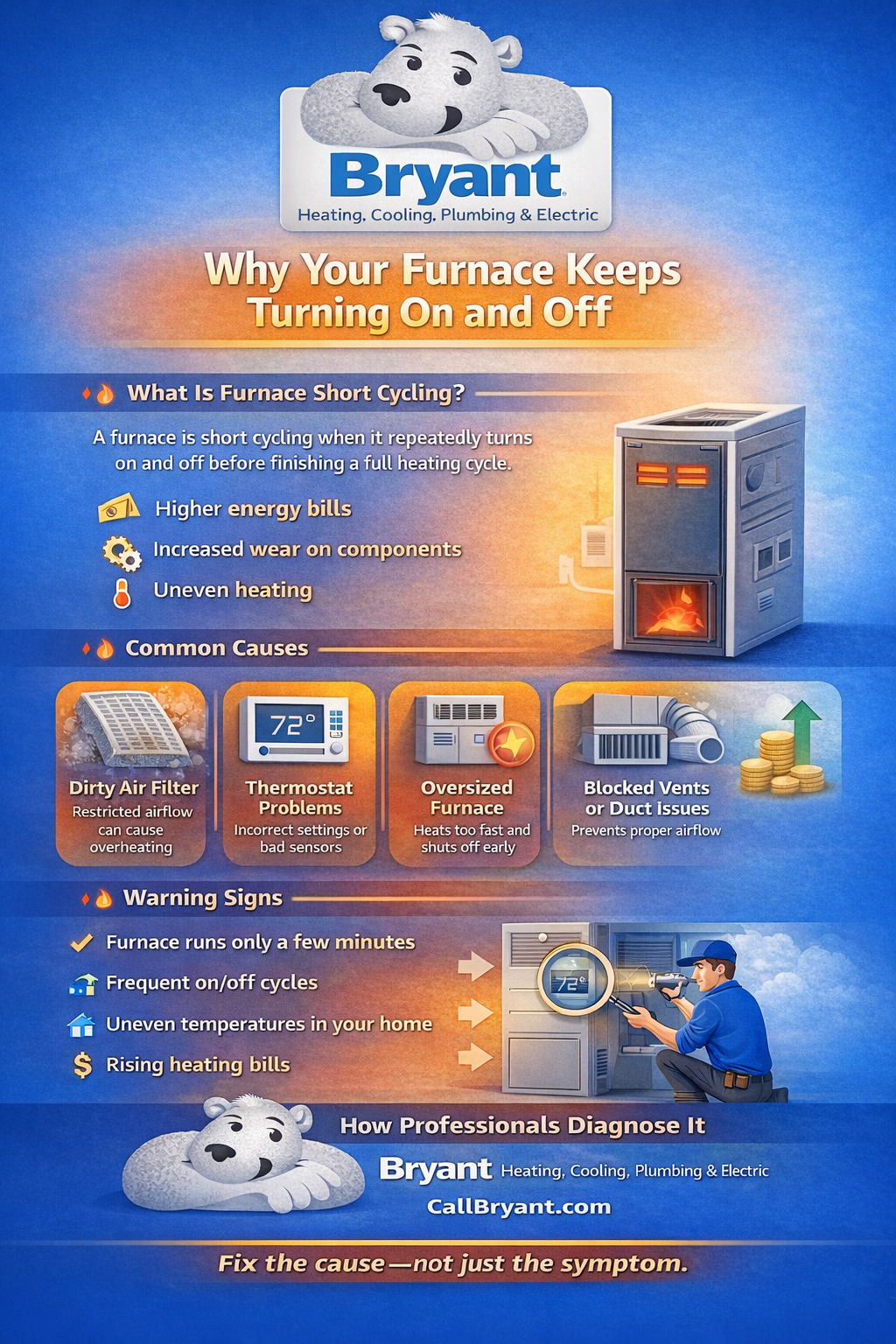
A furnace runs in steady cycles by design. It should turn on, heat your home to the thermostat’s set temperature, then shut off and stay off for a reasonable period. Short-cycling happens when that cycle gets interrupted. Instead of running long enough to distribute heat evenly, the system shuts down early and restarts again and again.
This constant starting and stopping wastes fuel. It also prevents your home from reaching consistent temperatures, which leaves some rooms cold while others feel stuffy. Over time, short-cycling accelerates wear on critical components, shortening the life of your furnace.
Why Short-Cycling Is a Bigger Problem Than It Seems
Every time your furnace starts, it uses extra energy and places stress on parts like the igniter, blower motor, and control board. When short-cycling continues unchecked, those components fail sooner than expected. What could have been a simple adjustment or cleaning can turn into a major furnace repair. The worst case is that a replacement is needed.
Short-cycling also affects indoor comfort. Since the furnace doesn’t run long enough to circulate warm air properly, you may feel constant temperature swings. You can respond by adjusting the thermostat frequently, which can make the problem worse rather than better.
Dirty Air Filters: The Most Common Culprit
One of the most frequent causes of furnace short-cycling is a dirty air filter. When the filter becomes clogged with dust and debris, airflow drops. Reduced airflow causes heat to build up inside the furnace, which triggers safety sensors that shut the system down to prevent overheating.
Once the furnace cools slightly, it restarts, only to overheat again a few minutes later. This cycle can repeat endlessly. Replacing the air filter on schedule is one of the simplest ways to prevent short-cycling and protect your furnace.
Thermostat Placement and Settings Problems
Your thermostat plays a major role in how long your furnace runs. If the thermostat sits too close to a heat source, such as a vent, window, or appliance, it may sense warmth too quickly and shut the furnace off before the rest of the house heats up.
Incorrect thermostat settings can also contribute to short-cycling. Rapid temperature adjustments, oversized temperature setbacks, or faulty wiring can confuse the system. In some cases, the thermostat itself malfunctions and sends incorrect signals to the furnace. A professional inspection can confirm whether your thermometer needs recalibration, relocation, or replacement.
Oversized Furnaces and Why Bigger Isn’t Better
An oversized furnace heats your home too quickly. While that may sound efficient, it often leads to short-cycling. The system reaches the thermostat’s target temperature fast, shuts off, and then restarts once the temperature drops slightly. This rapid cycling reduces efficiency and comfort. It also prevents proper air mixing, which can leave rooms unevenly heated. If your furnace was improperly sized during the installation, fixing the issue may involve system adjustments. In some cases, replacing the unit with a properly-sized model will be necessary.
Overheating Due to Restricted Airflow
Airflow problems extend beyond dirty filters. Blocked vents, closed registers, collapsed ductwork, or dirty blower components can all restrict air movement. When heat cannot move away from the heat exchanger, internal temperatures rise quickly. The furnace’s high-limit switch detects this unsafe condition and shuts the system down. Once temperatures drop, the furnace restarts, repeating the short-cycle pattern. Addressing airflow issues restores normal operation and protects the system from heat-related damage.
Flame Sensor and Ignition Issues
Modern furnaces rely on flame sensors to confirm that burners ignite properly. If the sensor becomes dirty or fails, it may not detect the flame even when combustion occurs. The furnace then shuts down for safety reasons and attempts to restart. This situation can appear to be short-cycling from your perspective. Professional cleaning or replacement of the flame sensor often resolves the issue quickly. Ignition system problems, including failing igniters or gas valve issues, can also interrupt normal heating cycles.
Limit Switches and Safety Controls Doing Their Job
Your furnace includes multiple safety switches designed to protect your home. When these components detect abnormal conditions, they shut down heat production. The blower may continue running, making it seem like the furnace is still active even though it is not heating. While these safety systems prevent dangerous situations, frequent activation signals an underlying problem. Ignoring repeated shutdowns allows the issue to worsen and increases the risk of a major failure.
Venting and Combustion Air Problems
Proper venting allows exhaust gases to exit your home safely. If debris blocks the vent pipes or limits combustion air intake, the furnace struggles to operate correctly. Pressure switches detect these issues and shut the system down to prevent unsafe conditions. Short-cycling caused by venting problems often occurs during extreme cold, when snow, ice, or debris obstructs intake or exhaust pipes.
Electrical and Control Board Issues
Electrical problems can also cause short-cycling. Loose wiring, failing relays, or a malfunctioning control board can interrupt communication between components. These issues may cause the furnace to shut off randomly and restart without completing a heating cycle. Since electrical faults can create safety hazards, professional diagnosis is essential.
How Professionals Diagnose Short-Cycling Correctly
Fixing furnace short-cycling requires more than replacing random parts. At Bryant Heating, Cooling, Plumbing & Electric, we start by observing system behavior, checking airflow, testing safety switches, and reviewing error codes. Our technicians inspect filters, ductwork, thermostat function, and combustion components to identify the root cause. This systematic approach prevents unnecessary repairs and helps to make sure that the furnace operates safely and efficiently after service. Accurate diagnosis also helps avoid recurring problems that can be frustrating.
How Regular Maintenance Prevents Short-Cycling
Annual furnace maintenance plays a major role in preventing short-cycling. During a tune-up, our team will clean sensors, inspect airflow, test safety controls, and verify proper operation. Small issues get addressed before they trigger repeated shutdowns. Maintenance also improves efficiency and extends equipment life. A well-maintained furnace runs longer, steadier cycles, which creates more consistent comfort and lower heating costs.
When Short-Cycling Means It’s Time for Replacement
In some cases, short-cycling indicates that a furnace is nearing the end of its useful life. Older systems with recurring issues may cost more to repair than replace. If the furnace is the wrong size for your home or shows signs of structural failure, replacing it often delivers better long-term value.
Fix the Cause, Not Just the Symptom
Furnace short-cycling is your system’s way of telling you something is not right. Regardless of the underlying issue, addressing it early protects your comfort and your investment. At Bryant Heating, Cooling, Plumbing & Electric, we’ve been providing quality HVAC services to the Louisville area since 1940. To schedule an appointment, contact us today.
