
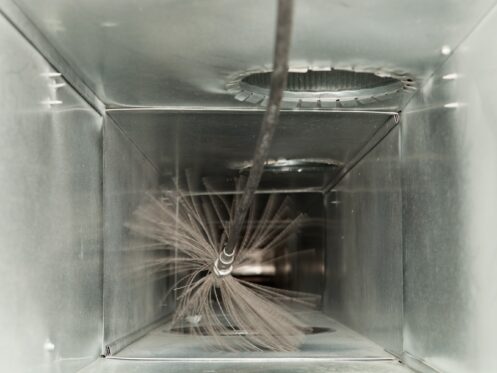
The furnace starts after months of limited use, and suddenly you notice a dusty smell near the vents. A brief odor or small amount of dust can be normal after a long cooling season. That doesn’t mean every home needs duct cleaning before winter. Cleaning is more worthwhile when dust, odors, debris, pests, or airflow changes keep returning.
Homes across Kentucky, Southern Indiana, and Greater Cincinnati transition from humid summers into regular fall heating. That seasonal shift makes ductwork easier to notice because the system runs more often. Older city homes, newer suburban houses, and rural properties can all develop different duct concerns. The condition of your home should guide the decision, not the calendar alone.
What Can Build Up Inside Your Ductwork?
Ductwork can collect household dust, pet hair, dander, pollen, and other particles over time. The amount depends on filtration, household activity, pets, remodeling, and the condition of the duct system. Some buildup stays harmlessly settled instead of constantly circulating through the home. Heavy accumulation or visible contamination deserves a closer look.
Remodeling can add drywall dust, sawdust, insulation fibers, and construction debris to the air. That concern can matter in older homes that have been updated several times. New construction can also leave debris if ducts were exposed during building work. A professional inspection can show whether that material has collected inside accessible duct sections.
Pests and moisture can create different problems than ordinary household dust. Rodents or insects may leave nesting materials, droppings, or damaged duct sections behind. Humid summers can also make moisture concerns worth investigating when duct or equipment problems already exist. Persistent moisture should be traced to its source instead of treated as a cleaning issue alone.
Signs Your Air Ducts May Need Cleaning
Professional cleaning becomes more reasonable when clear signs of buildup appear and continue. Visible debris inside accessible ductwork is one of the strongest clues. Dust that returns quickly around supply registers can also justify further inspection. Several symptoms together usually provide more useful information than one dusty vent.
- Visible debris inside accessible ducts
- Dust collecting quickly around registers
- Persistent musty or stale odors
- Rooms that seem unusually dusty
- Recent remodeling or construction work
- Evidence of pest activity
- Ongoing indoor air quality concerns
Timing matters when you notice these changes. A short-lived dusty smell during the first heating cycle may disappear quickly. A musty odor that returns every time the system runs deserves more attention. Likewise, recurring dust throughout the home may point to filtration, leakage, or duct contamination.
What Duct Cleaning Can and Cannot Fix
Duct cleaning can remove accumulated debris when buildup inside the duct system is the actual problem. It cannot repair leaks, reconnect loose sections, or correct improperly sized ductwork. Cleaning also cannot solve every airflow or comfort complaint. The cause needs to be identified before choosing a service.
Leaky ducts can lose conditioned air before it reaches the rooms they serve. Disconnected sections can create even larger airflow problems in attics, crawl spaces, or other hidden areas. Poorly sized ducts may also restrict air movement even when the inside surfaces are clean. Those conditions require evaluation and repair, not cleaning alone.
A room that stays colder than the rest of the house may have a bigger comfort problem. Weak airflow, insulation gaps, equipment issues, or duct damage can all contribute. Cleaning dirty ducts may help when debris is restricting airflow, but it will not correct unrelated causes. An HVAC technician can narrow down the source before recommending work.
Why Fall Is a Good Time to Check Your Ductwork
Fall is a good time to evaluate ductwork because regular heating use is about to increase. The furnace may have run very little during the warmer months. Homeowners often already check filters and arrange heating maintenance during this seasonal change. That makes it easy to include a ductwork inspection at the same time as heating maintenance.
Checking during fall also leaves time to address airflow, duct damage, or contamination before heavier heating use begins. Once colder weather settles in, the system will circulate air through the home more frequently. Problems that seemed minor during occasional operation can become more noticeable with daily use. Early evaluation can clarify whether cleaning, sealing, or repair is appropriate.
What Homeowners Can Check First
Homeowners can start with a few simple observations before scheduling duct cleaning. Check the filter and replace it if it is dirty or overdue. Vacuum accessible supply and return grilles without reaching into hidden duct sections. Then watch for dust, moisture, unusual odors, or weak airflow during normal system operation.
- HVAC filter condition
- Accessible supply and return grilles
- Visible dust, moisture, or debris
- Dust that returns unusually quickly
- Rooms with weaker airflow
- Persistent odors during operation
These observations cannot show everything happening inside the duct system. They can, however, reveal patterns that help a technician investigate efficiently. Avoid taking duct sections apart or trying to clean areas you cannot safely reach. Note what you see, smell, and feel instead.
When to Have the Ductwork Professionally Inspected
Professional inspection makes sense when contamination, odors, pest evidence, or airflow changes continue after basic checks. It is also appropriate when duct sections appear damaged, loose, or disconnected. An inspection can separate a cleaning need from a repair or sealing problem. That distinction helps match the service to the actual cause.
- Visible contamination
- Evidence of pest activity
- Persistent musty odors
- Noticeably reduced airflow
- Damaged or disconnected ductwork
- Uncertainty about cleaning, sealing, or repair
A technician can evaluate the duct system along with related heating and airflow concerns. This broader view matters when symptoms involve more than dust alone. The right recommendation may involve cleaning, duct repair, sealing, filtration, or another heating system issue. Starting with diagnosis can prevent unnecessary work.
Schedule Your Ductwork Inspection
Duct cleaning should depend on your home’s condition, not an automatic yearly schedule. Fall is a useful time to notice dust, odors, airflow changes, and other signs before regular heating begins. Bryant Heating, Cooling, Plumbing & Electric serves Kentucky, Southern Indiana, and Greater Cincinnati with experienced HVAC support. Our NATE-certified technicians can evaluate ductwork concerns and recommend the appropriate next step.
We also back our service with a 100% Service Guarantee. Our goal is to identify whether cleaning, sealing, repair, or another solution fits the problem. That approach helps you prepare the entire heating system for the season ahead. It also keeps attention on the cause instead of one possible service.
Contact Bryant Heating, Cooling, Plumbing & Electric to schedule a ductwork inspection for your home in Kentucky, Southern Indiana, or Greater Cincinnati.
